Posts Tagged ‘Book Reviews’

A Review of “The Shame of What We Are” by Sam Gridley

Sunday, March 27th, 2011

Spencer Dew

The vignettes that make up this “novel in pieces” follow a child named Art as he sorts through the confusion that is childhood. These are glimpses at moments of vulnerability, strung along a trajectory of change, development, the old Bildungsroman shtick, without the roman part, really, as these are more sketches than anything else, and there’s a sense, throughout, of a holding back, perhaps geared to mimic Art’s own withdrawal into art, wincing away from the terrors of atomic war and Sputnik by turning to science fiction, adventure stories, or seeking to escape from his father’s rage by traveling deeper into his own interior existence. At the book’s beginning, Art is in a hospital bed, and this theme of the fragility of life recurs throughout—the horror of childhood is, in part, horror at the reality of the mortal condition. A pet is crushed between the wheels of a car, a model plane crashes into the ground, and Art, meanwhile, matures from daydreams of invisibility to fantasies of suicide. From bruised child to young bohemian, but, again, it’s the unspoken that characterizes The Shame of What We Are, and not in some laudable way. Art comes to believe that “his true life was in another universe,” but we aren’t shown that universe, merely why and how a person might come to that conclusion, might come to need that belief. Art—the category of human actions—morphs from mechanism of escape to one of defense to, ultimately, a place of refuge, but unlike so many successful Bildungsromans, we’re never shown this transformation, merely told about it. Art—the character—reads Lawrence Durrell in class, and he relays to us that it was a thrill, but unless this information incites some vicarious memory in the reader, the reader will likely be left out. Which is perhaps Gridley’s intent; “It seemed he’d always been as disconnected and lightheaded as he felt now,” he writes, about a narrator who is as dazed, at the story’s end, as he is at its start, still flinching away from the pain and fear of life.

Official Sam Gridley Web Site
Official New Door Books Web Site

A Review of “Don’t Go Fish” by Kat Dixon

Friday, February 11th, 2011

Jessica Maybury

Don’t Go Fish is the fourth chapbook Kat Dixon has published, the others being Kississippi, an e-chap from Gold Wake Press, and Planetary Mass and Birding, which are both forthcoming (Dancing Girl Press and Thunderclap Press, respectively).

Coming from Maverick Duck Press, Don’t Go Fish is plain and unassuming, and after a few reasons I realise why. Dixon’s writing needs no adornment. The images rise up from the pages to evoke an inner landscape that, while whimsical, is lit by a stark and unforgiving light. By stark, I mean a sparseness of metre and economy of words. By unforgiving, I mean in tone, in meaning and in style.

Speaking of style. This might be taken as a reductionist observation, but certain things like attention to line length, use of colour and metaphor remind me of poets like William Carlos Williams and H. D. Which lead on through logical progression to the Modernist movement in general, the Imagists in particular.

Lines such as “Address: / (stunned blue beneath a collapsed / skylight and folded / into so much rescued wrapping paper,” and, “When morning comes, I’ll be there / Sewn into the neck of your undershirt. / Breathing,” are all spare simplicity and offhanded control. Dixon doesn’t need long, overly clever interpolations or convoluted, emotionally weighted similes.

I have been carrying this book around with me for months. The lines sink in slowly, giving up their subtler narratives measure by measure. It is not a book that can be gulped down and digested—you must wait, and taste it first.

Official Kat Dixon Web Site
Official Maverick Duck Press Web Site

A Review of “Life in the Slow Lane: Surviving a Tour of Duty in Drivers Education” by Thomas M. Sullivan

Friday, February 11th, 2011

Spencer Dew

According to my notes, the Driver’s Ed company is located in Suite 405. Well, the tall mahogany door in front of me does have the number 405 on it, but I’m looking at a brass plaque with the name of some real estate company. There’s no mention of any driving school.

I push the door open anyway, enter a silent room, and hike across a mile of marble to the reception desk. The lobby is excruciatingly bright and devoid of plant life. A receptionist looks up from blowing on her bright finger nails and chirps, “Hello,” with false enthusiasm.

“Um, I’ve come for my Driver’s Ed interview,” I stammer. “Is this the right place?” I glance down at her desk and spy the latest issue of People and a bottle of nail polish, modern accessories of the downsizing-prone employee.

She laughs as she nods.  “They all say that.”

“Buckle up,” Thomas Sullivan warns his readers early in this “excruciatingly” boring narrative, the detailed chronicle of the author’s time working for a “hypocritical” driving instruction company, “and enjoy the ride.” Car puns abound—“Maybe a sort of Car-ma was at work” in leading his destiny to this job, for instance, a job for which he was, initially, “revved”—but even as the humor here is relied upon to give life to the story, it falls short. Righteous anger, rather than humor, is the deeper motivation here; Sullivan tells this story in order to give voice to his indignation at the “empty, commercial relationship” this particular company had with its clients, kids for whom the authors feels a particular connection and for whom he has a special compassion, which, in turn, is the root of his pedagogical approach. If you care about how “Being exposed to a Driver’s Ed company that doesn’t value people or relationships,” then you might manage to stomach a few pages of this book.

Plot twists include the part where the author decides, “it’s time to finally deal with my dental issues.” Moments of revelation include the moment where the author “must admit that I’ve done a full reversal on the cell phone issue,” declaring “Maybe these communication technologies can be cool if you can control their impact on your life.” There are also broader reflections on social and political ramifications of “car culture”: “This dispersal of people into sprawling, fuel-chugging communities definitely has a cost.” If you think you’ve heard all this before, don’t worry—you absolutely have not heard the relentless barrage of accounts of driver’s education session after driver’s education session.

For me, the only break from this monotony was an unintentionally creepy moment “grinding away two dead hours between lessons, reading a copy of Teen in the 7-Eleven,” but, alas, even this is merely earnest “Continuing education … to further my knowledge of the teenage world.”

The root of the problem with this book is what the author refers to as a “clash” “between competing perspectives over what is acceptable.” One perspective holds that books, in order to be published, should show a certain merit; that a memoir, in order to stand on its own as a text, must be artfully framed. A life is shaped in the telling, animated—a boring life can certainly make an interesting book, but it takes work, the work of writing. Sullivan’s perspective seems to be that recitation—regurgitation, even, as it often seems to be—of events are sufficient enough, structured by a chronological bookends (he needs a job, he becomes a driving instructor, he leaves the “hypocritical” company) and veined with a moral critique (it is, after all, a “hypocritical” company, and Sullivan is “a good teacher,” “decent at the job,” with some opinions to pass on about what that means and why it matters). I do not believe that what Sullivan has done, in these pages, is a finished book. What we have, at best, is a rough draft, a rambling sketch needing the infusion of order, form—needing, in short, effort, hard work, an investment of time.

Life in the Slow Lane is a book that should not be read, but, worse, Sullivan has not yet written it.

Official Thomas M. Sullivan Web Site
Official Uncial Press Web Site

A Review of “Songs of Vagabonds, Misfits, and Sinners: New York Stories” by Ken Wohlrob

Friday, February 4th, 2011

Spencer Dew

Ken Wohlrob shares a certain ideal with Henry Miller, a commitment to “the streets” as that which stands in opposition to “literature.” As laid out at the start of Black Spring, Miller believed that “In the street you learn what human beings really are; otherwise, or afterwards, you invent them.”

“What is not in the open street is false, derived, that is to say, literature,” Miller insisted, and while much could be said about this understanding of the world (and of art, which, to be authentic, must represent a return to the “wild”—to “childhood” in a sense Miller adapts from Rimbaud), suffice it to say that Wohlrob, in this collection of stories set in and otherwise about the streets and public spaces of New York City, has a similar allergy to that which is “false, derived.” This is not to say that these pages crackle with the vigor and originality of Henry Miller—they do not. But the pieces in Songs of Vagabonds, Misfits, and Sinners: New York Stories, rely on a dichotomy between authentic and fake, between feeling and pose.

Consider the giant tampon, a piece of installation art, its string kicked around or trampled by gallery visitors. This isn’t the sort of art that finds valorization in these city stories. Rather, Wohlrob channels the voices and tastes of various New Yorkers—the old Italian man searching for the right variety of Tums at a CVS store, the woman dancing at a strip club to put away some money for her daughter—who are resolutely of the street as Miller meant that phrase.

Consider Ramón, who learned to paint from his father, sitting on a milk crate, working on “flattened cardboard boxes from behind the bodegas.” The two would travel from Brooklyn in to the Met, admiring certain paintings, like Klimt’s Mada… which “was Ramón’s first girlfriend. Pale, surly, and beautiful,” though “He could never pinpoint what exactly drew him to her. There was a mystery, a presence, or a something.” Ramón, however, is a painter of the streets. His tastes run toward Otto Dix, but he’s trapped in a world where galleries feature portraits of cartoon characters or “a series dedicated to photographs of feet … lascivious scenes inspired by Balzac’s Droll Stories with cutouts from Disney coloring books,” etc. He misses the old neighborhood and its wild reality, its streetness, and he tries to capture something of that in his own painting, one of which ends up hanging in a men’s room , or, as Miller and Ramón would rightly insist on calling it, a toilet. Irony and theory are not interests of Ramón’s. “Where is the goddamn mystery??!! Where’s your passion??!!” he asks of the works of contemporaries. Yet there is indeed a passion, and a mystery, in his work ending up there amid the sounds of defecation, the automatic flushing, the human filth and mechanical sterilization.

The toilet, as juncture between the human and its denial, is, in fact, the perfect place for art. The toilet is practically “the street” (Miller, in Black Spring, sings the praises, at length, of Parisian-style outdoor urinals). Likewise, out in an alley, among the garbage cans, two denizens of this book argue over Kandinsky and Joan Miro, a spat cleared up only by another man screaming the name Max Ernst from his open window. Yes, this is the street: “scraggly men, in soiled t-shirts, the necks wide and stretched so their chests could be seen, tattered sport coats with rips in the material, and pants that once had color but now only had grime, circled one another, hands held out like claws, crouched down in wrestling stances.” “Kandinsky asshole!” screams one. “Joan Miro fuckhead!” comes the retort.

The riddle of Miller’s stance, of course, is how to make “literature” out of that which resolutely rejects being “literature”—how, in short, to weave written art out of material that resists any whiff of being “false, derived.” Or, to phrase it another way: How do you consistently churn out such stuff without becoming a caricature, a cheap copy of your own better moments? Urine and cabbage don’t make a story more real, more authentic. Hanging a picture in a toilet doesn’t make it more of a comment on or scream against the slow decay of human existence.

Wohlrob attempts to counter this risk with details. Fading sunlight makes “the old couch look even more battered and bruised, silver duct tape glowing against the pale, worn brown leather. Off in the distance, cars ran over potholes and divots as they raced down the BQE.” Here are the citizens of Washington Heights one afternoon:

Dominican crisscrossing Cuban, Puerto Rican walking around Irish, hipsters scooting past doctors and nurses from Columbia University Medical Center. They headed towards the Puerto Rican restaurant with the chickens hanging in the window, the drippings glistening on the crisp, dark skin. Or to the Gristedes to pick up cabbage, rice, and a liter of Pepsi. Or into the Dominican bodega to buy calling cards with names such as “Oro Solido,” “Knockout,” and “100% Platano NY.” Or just to get home, the final stretch in a return to peace and quiet, or at least enough peace and quiet that could be had on humid summer night when everyone sat on the front stoop, listening to the local Reggaeton station, yelling up and down the block, and playing dominos.

Then there is the psychological, the emotional element, which, for Wohlrob, is frequently one of desperation. A husband smells his wife’s cancer on her vomit, her breath. A scam is coined to pay for medical bills, but here’s the view inside the scammer’s mind, a stab at a vernacular of suffering—of confusion and terror and pain:

They walked down the hallway. Room numbers rolled past. 4G05. 4G06. On the other side: 4E18. 4E15. Nurses and doctors throwing out measurements: 10ccs of this, 12 milligrams of the other, two doses of blankblankblankamine. The dials of the blood pressure cuffs: 120, 140, 160, 180. The LCD readouts of electronic thermometers: 105, 102, 98. The Sanskrit of physician writing followed by an endless stream of numbers in columns. More room numbers. 4G01. 4E02. Then a calendar with days marked, meetings listed with times.  November 20th, 2:00, admin meeting. A clock on the wall. 8:05 pm.

These stories don’t always succeed. There are characters that are hard to care about, the music of the street—particularly how people talk—is alluded to rather than represented, and there are false notes, choreographed comparisons, images that smack of the derived. But in the end there is an ample dose, too, of the “accident and incident, drama, movement” that Miller argued was the inheritance of being born and raised in the streets.

Official Ken Wohlrob Web Site

A Review of “2010 Press 53 Open Awards Anthology” by Kevin Morgan Watson, Editor

Friday, February 4th, 2011

Spencer Dew

A Review of He Wanted to Be a Cartoonist for The New Yorker
by Matthew James Babcock

“What, after all,”  Matthew James Babcock asks in the course of this poignant and sinewy novella, “is the difference between joy and agony? Between laugh and scream?

In both cases, the body churns chemicals and shoots fluids through millions of lubricated labyrinths. The lungs pump. Tears bloom. Pressure snaps a tendon of pencil lead. Incisions of ink mar paper and flesh. There is a cleansing, a burst of clarity. A hush follows. The result is truth. Something new is conceived, a fresh connection or observation, something drawn up for the first time. It is original, your creation.

The protagonist, Bryce, has a friendless school life and a violent drunk for a father. After an obsession with a young vixen leads to further humiliation, Bryce exhibits an uncanny knack for cartoons of, as the title indicates, the variety found in The New Yorker. Consider “Christmas at the Nonconformists,” for instance, “a shot of a woman gripping a clown figure whose accordion-spring body had been permanently ripped from its mechanized container. She exclaimed, ‘Oh, Bill. Just what I wanted. A Jack-Outside-The-Box!’” Or, farther down the slide of crossword puzzle word-play, “Henri-Louis Pernod vending a new beverage from a street in Couvet, a customer eyeing an elaborate glass of the liquid, and asking, ‘Will it really make the heart grow fonder?’”

Babcock coins some nice cartoon punch lines, but the real strength of He Wanted to Be a Cartoonist… is the tightness of its prose, the propelling quality of its descriptions—be these of the sputtering hot metal of combat in Somalia or the slow, generally wordless choreography of a marriage coming apart. The feverish banalities of adolescence are Babcock’s particular forte, from the sludge of an afternoon alone to feverish obsessions over a crush. Bryce sees the object of his affection everywhere, in billboards and street signs: “She was Stop, Yield, and School Zone,” though she is also there, “her legs suntanned and shapely in pleated Terminix shorts,” having “declared war on household pests.” Babcock laces up the irony, but he also nicely preserves the quivering vulnerability of nostalgia, even nostalgia for a kind of misery, as lonely Bryce, slouched in a 4-H T-shirt, contemplates a teen club where “Everyone else sparkled … They wore lacy stockings, body-hugging tank tops, and cobra-backed blazers scored with canary candystripes,” and the air, it “smelled of deodorant, pickles, and club sandwiches.”

Life evades our plans, eschewing rational pattern, sense. And for this, the logic of cartoons is best suited to helps us cope and carry on. In art, as this novella argues, “there is little to explain …

There is only the urge to forge dissonance, to slap pigments and punch clay, to sculpt expressions of shock and meditative bliss. Time and space? Irrelevant. Probability? A nuisance. What is the distance, say, between Michael Jordan and Michelangelo? Mona Lisa and Mogadishu? Thomas Carlyle and Thomas the Tank Engine? It is the difference between dusk and dawn, paper and ink, creation and destruction. Which is to say, no difference at all.

A Review of May-September
by Jen Michalski

One of two novellas tied for first place in last year’s Press 53 Open Awards competition, Jen Michalski’s May-September is the story of Alice—a young woman with an MFA and a bookstore job, “eager for a handsome reimbursement”—and Sandra—an older woman embarking on a project of posting her memoirs on a blog. This is a story, then, of unlikely love, tenderly traced, and, just as much, of the weight of memory, the relationships that continue in our minds, even (or especially) when we are alone and their time long past.

For Sandra, “The nights were always the worst, when it was darkest and quietest. She couldn’t play the piano because of the neighbors, and all she had were her memories. No matter what she did, she could not make them loud enough in her mind. To fill the dark. She hated that they were so soft, pastel chalks, interrupted by car horns, intestinal distress, her own inexplicable sadness.” For Alice, whose own recent ex is still a physical presence in her life, the sadness is different but no less heavy.

Bringing these two together, Michalski demonstrates a gift for empathy and, more impressively, for pacing. Annoyance turns to longing, to desire, to love. Yet when Alice touches Sandra, she feels the cartilage beneath the flesh; “She thought about how, when she was Sandra’s age, not even Sandra’s age, Sandra would be dead.” Alone in Sandra’s bathroom, undressing, in preparation for what she knows not quiet, Alice finds herself pondering “the Oil of Olay, the prescriptions for osteoporosis, cholesterol. Tylenol. Ex-Lax. Eye drops” in the medicine cabinet, which is to say she opens the medicine cabinet, she searches out and stares these products down. “You are worried because I am so much older,” says Sandra, after a joke about how “it’s always good to check the expiration date,” but “Has it occurred to you that I am worried because you are so much younger?”

Either age is a problem, in the end, and Sandra is forced into the care of her daughter while Alice returns to her mother’s house, to childhood. “It had not been a long time,” Michalski writes, “Them. A few months,” yet May-September seems to make the same claim about all of us, in our leaky, watery bodies, sagging and becoming brittle as we shuffle through our too-temporary existences. It is stories like this that give us useful pause, prompting some reconsideration of what, in the end, might really matter.

Official Jen Michalski Web Site
Official Press 53 Web Site

A Review of “Sorry I Ruined Your Orgy” by Bradley Sands

Friday, January 21st, 2011

Spencer Dew

“I secretly love Adolf Hitler,” writes Bradley Sands. “I secretly love Adolf Hitler and I don’t care what you think. If I had to choose one person to pump Zyklon B gas through my elegant dual shower head, it would be Adolf Hitler. I would clutch my throat knowing that Adolf Hitler loved me, knowing that he cared.” An animatronic Chuck Woolery, an alligator astronaut, an assortment of AK-47s, Eggs Benedict at a diner with a dinosaur, idolization of Hitler—these are a few of the things this book freewheels its way through, rattling off a shout-out to William S. Burroughs along the way, and introducing, in one story, a Tao Lin-like character called, in a Tao Lin-like style, “Tao Lin.” Something of Lin’s flat tone comes through, too, only without the perky notes, the humor. The humor of Sorry I Ruined Your Orgy is like that in the Hitler quote above, or in the following suicide scene:

The suicidal amputee’s right leg pushes the Z button to make him think about the cheapness of Baron Rothschild Vodka. The suicidal amputee’s left leg presses right on the control pad to roll him through the screen door. The suicidal amputee’s right leg pushes the B button to make him think about the time he shot a gook in the face. The suicidal amputee’s left leg presses left and then down on the control pad to roll him into traffic.

While the prose captures something of the frustration or obsession or lunacy or idiocy of the narrative voices (parodying the phenomenon of bestsellers, game shows, or searching for lost remote controls, journeying up noses, etc.) there is a gaping absence throughout, a lack of anything more than the sort of froth and gimmickry contained in a line like “If I had to choose one person to pump Zyklon B gas through my elegant dual shower head, it would be Adolf Hitler.” If you think such a line is funny, or clever, perhaps this book will amuse. If you find it perhaps cheap, silly in a strained strategically shocking way, morally vacuous, devoid of the pleasures of sound or rhythm or idea or imagery, or, maybe worst of all, if it sounds to you merely like a belated attempt to mimic other, more successful and innovative voices from a few years back, then Sorry I Ruined Your Orgy will disappoint. “The giraffe does not even know Tudor England exists,” Sands writes, in another representative sample of this book:

How should he know? He has never seen Showtime’s original series, The Tudors. He does not know what Tudor England looks like. When the giraffe looks at Tudor England, all he sees is a junkyard. Having never seen The Tudors, the small, ceramic giraffe walks to the shop as loneliness and insignificance drips down his small neck.

If this evokes some pang of loneliness and resonates as some larger statement on our world and the human condition, then, dear reader, good on you. If it drips like so much insignificance and tatty assemblage writing, then, dear reader, move on.

Official Bradley Sands Web Site
Official Lazy Fascist Press Web Site

A Review of “Monkeybicycle 7” by Steven Seighman, Editor

Sunday, January 16th, 2011

Spencer Dew

Niels Bohr, we learn from one of the stories in this journal, hypothesized that “conscious observation could shift potentiality into actuality. If no one is looking, there is no event, only a swirl of probabilities.” This story, Reed Hearne’s “It Takes Two Entangled,” plays up the unwatched, the hidden, the discovered—be it a shrine behind the water heater or a shopping bag full of lingerie and blue plastic razors. Other stories here obsess over the act of perception itself, whether via a cat that takes drugs and stares at reproductions of Salvador Dali works or a visitor on a Kafkaesque journey through a foreign land or a call girl studying the specimens on show in a faculty gallery exhibit. Then there is Ken Saji’s chain of haiku, “Haiku on Haiku”:

These verses distill,
Enthrall, beguile, enrich. Kind
Of like a meth lab.

All the way down to

Those Japanese. So,
So smart. So, so, so, so, so,
So, so, so, so smart.

There are some funny moments in this magazine, but nothing breathtaking, haunting. Instead, the dominant tone is one of MFA earnestness in story constructions, frequent gimmickry in pinning a piece to some line of thought or the historical moment. “Despite all the attempts that were made to save it,” read one poem about protest, “the entire country of Iraq has been destroyed, / brought down to rubble, / turned into a dark and scary place.” In the story about the call girl, as she waits to be faux-raped, she rereads Foucault’s Archaeology of Knowledge and shudders with “the resonance between material and immaterial objects, a grating fusion and dissonance at once necessary and accidental.  It was past and present colliding on the page, in the word.” There is a persistent sense, in this volume, of trying too hard, of aiming to hit the steps without actually feeling the dance one’s attempting to do.

Consider Yassen Vassilev’s “Amnesia During Meditation,” where the text becomes a rabbit hole, down into which we, the readers, go wading “in clouds under a rainfall of question marks” where “wax faces of hallucinogenic people drip / abducted in nirvana through opium and absinthe.” Shamans drums and such, “rods hit the glands of the gnosis / and the pulse of the universe echoes hypnotically,” though the poem, as a sort of blended free-association and surface reading of textbook Vedanta, disappoints, feeling uncomfortably like, as the poet says, a “text … without end and indefinite.”

Not that there aren’t highlights here: Elizabeth Alexander’s intricate “On Anzio Beach,” Edwin Wilson Rivera’s rollicking assemblage of vernacular—“Urbanology”—Steven Coatsworth on a kind of L.A. (“Tack one side of this memoria to the wall and run, stretched over sangre highways and desert cities, bake-and-broil skies, over dream fields and gravestones”) or Aaron Gilbreath on “Tijuana,” where a strip club stage is described as “Barely larger than a table at KFC,” lit by “a hot white light not unlike those featured in alien movie abduction scenes.” This is gringo perception, spun like carnival sugar: “I didn’t even want what was dancing naked on the stage: a sad, mascara-abusing woman, her flabby bronze backside lashed like Virginia ham by a single string.” But such moments are small rewards, hidden within the whole, a whole not worth the twelve dollar cover price.

Official Monkeybicycle Web Site
Official Dzanc Books Web Site

A Review of “Anatolia and Other Stories” by Anis Shivani

Sunday, January 9th, 2011

Spencer Dew

The stories here share an attention to issues of insider and outsider, whether, in its horrific extremes, this dynamic leads to minorities on a death ship, awaiting forced repatriation or extermination, or whether, in a too-familiar milieu for a certain type of short story, this dynamic plays out in a writer’s conference, the ubiquitous chatter laced with references to therapy and the praise of low-residency MFA programs. In one story, prisoners of an internment camp produce an overly earnest “newspaper” thick with editorials absurdly insisting that “we must be ready to resume normal life when conditions permit it.” In another—the one about the writer’s conference, patterned off of Bread Loaf in Vermont, we hear that “Sadie wrote exclusively about Central American refugees. Dylan kept volubly hitting on Sadie, still praising Max the gender-smashing silent poet.”

The problem with this collection is how much a product of such strange locations it seems—the writer’s conference, not the internment camp. While tackling international locales and the issues and internal worlds of immigrant workers and assorted nomads, all the while poking questions at monolithic claims about “the American way of life,” Anatolia and Other Stories skirts just above the level of the didactic, speaking too often in a voice of a wilted intellectual, someone taking refuge in libraries as true horror explodes beyond the walls, captured beautifully in the use of the Indian euphemism for ethnic riots, lynching, and mass rape, “these communal prejudices, these needless hassles.”

The characters here, while not at home in the writer’s conference, nonetheless seem to speak as part of a diaspora long-wandering from some promised land of workshops and, in one case, protests. Indeed, the U.W. Madison professor who has just adopted a Vietnamese boy embodies an essential inertia of this book, a kind of surrender, draped in nostalgia. “Protest,” he claims, “had none of the life-and-death value it used to have during Vietnam. It was now entirely a vicarious operation. None of these nice kids was going to suffer or die because of our policies. It meant nothing.” While the trajectory of this story, “Profession,” crests toward some true education for this professor, the tone of meaninglessness still predominates, and more attention is given to the margins of the English department than to the realities lurking behind, for instance, the adopted boy’s declaration

that he wanted to forget his past, his homeland, his whole previous life, and start with a fresh slate. It had been an astounding statement. Where had he learned such a complex and mature thought? Had his master at the Hanoi orphanage, where Nam Loc had managed to thrive for two years after his parents died, trained him to say this to his new guardians? Lauren would know what to make of this near-Gothic eruption. Although nominally a professor in the English department, where in the affluent sixties she had held forth on the silences of the female-authored Victorian novel, Lauren was all over the place now: pulp fiction, Hollywood, sitcoms, billboards, and internet chat rooms. In the age of cultural studies and theory, it was what one did to maintain currency.

And so we travel to a lecture, witness discourse getting discoursed about, and the old professor falls asleep in the pillowy moment. Shivani doubtless has a razorblade of critique wedged inside that pillow, but it takes some sitting to find it. The following story, “Go Sell It On the Mountain,” about the writer’s conference, voices a critique clearly, but this critique itself is distanced, padded, delivered by a New York wunderkind, a Cameroonian novelist identified by the narrator as wearing, every day “a miraculously ballsy outfit, never with a bra.” This narrator, as obvious from that description, might not be much of a writer, but he simultaneously believes that “real artists…were naturally forged from the flux and flow of normal stressful life” and has paid “three thousand dollars, all told, for the right to be at the Conference.” So he can be there as participants faint from the strain of so many readings and workshops, as participants line up for autographs, and as that New Yorker from Cameroon stands to declare that each year’s event is the same as the last, an instantiation of absurd insulation, a gathering where

Everyone will think the short story is the art form par excellence. Experimentalism will be in vogue. There will be declamations of the unfortunate current tendency to introduce politics into art…. Agents will try to convince us that publication is not the important thing, perfecting our craft is. The merits of low-residency writing programs will be articulated by recent graduates. There’ll be humorous Homeland Security and Sexual Transgression readings…. Veteran faculty will hang out only with their kind, as will younger faculty. Fellows will try to exclude waiters from their parties, waiters will try to exclude scholars, and scholars will try to exclude paying contributors. Someone will be caught fucking in the laundry room after a week. Two minority girls will faint in the Frost Theater during the first days, only to be rescued by white male doctors in the audience. A middle-aged housewife will break down at a reading by a poet of color. The bookstore will run out of books to be signed by novelists. Most people will get drunk, but almost no one will really make a fool of themselves.

Like the protest in Madison that the professor bumps into, this voicing of truths leads to no change. The status quo—while diverse, shifting from Tehran to America, Dubai to that boat full of refugees—resists assaults and replicates itself. Each year the conference is the same, a continuation of tradition, a zealous commitment to the rituals of a specific minority group awash in the wider world. Shivani’s collection ties various examples of such communities, such experiences, together, but this book reads, too, like a string of voices testifying to their own trapped conditions, whether on a death ship, in a prison camp, a writer’s retreat, an academic career, or, as one library-bound exile writes, “Indianapolis…the reviled, bland Midwestern city that outré writers like Kurt Vonnegut have targeted for satire over these recurrently sad late twentieth-century decades.” This, ultimately, is the voice of Anatolia, a voice erudite just to the point of uselessness, not so much naïve in opinion as blinded by one opinionated state; a voice expressing desperation in a variety of its quieter tones.

Official Anis Shivani Web Site
Official Black Lawrence Press Web Site

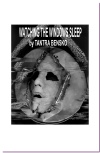
A Review of “Watching the Windows Sleep” by Tantra Bensko

Sunday, January 9th, 2011

Spencer Dew

Tantra Bensko is identified in her bio as someone who “teaches Experimental Fiction Writing through colleges, online,” and on this chapbook’s title page she is identified as “Tantra Bensko, MFA.” These credentialing gestures may be absurd, the bow tie on the decorative column, the tattered top hat on the performing corpse, but I fear there is no wink, no knowing Dadaist smile, behind either line. The “Experimental,” with the capital E, and the MFA, a capital accomplishment, are meant in dread earnest, and meant to impress. As, unfortunately, is the content of the chapbook, stories about fragments of dreams and/or the physics and phenomenology thereof. “In the future, you will forget it, in the past you have forgotten it, so I know the secret will be safe if I keep it in the present. The present will enfold it and keep it mine, and yet I can revel in the telling of it.” This about says it all, as Watching the Windows Sleep is characterized by an earnest reveling on the part of its self-identified Experimental author, but likely will not linger long in the reader’s mind.

“How many worlds intersect here? How many worlds are dreaming of other worlds?… How do YOU appear in those worlds? As a shadow of a cloud? As a sound of unusually melodic wind?” Fair questions, but what I longed to encounter more of in this chapbook was something like an answer, however enigmatic. Consider the “lucid windows” washed down with frothing cream, flashing significant scenes to a cigar-smoking man in a yellow suit who just happens to be wandering by—here at least there are descriptions that can be grasped. Too often Bensko gives us a vague gloss, caving to that profoundly distancing effect of narrating a dream not shared by the person hearing the narration. “Symbols.  Yet so real and lush and living, with individual emotions,” she writes at one point, “Being symbols doesn’t make them any less poignant and vibrant.” I’d love to believe this, but it just lacks spark. What if houseplants had hair? Well, that would be a situation, and perhaps a story, but a chain of rhetorical questions does not a story make.

Poetry seems to be the best way to create what you will live. Better than lists. Or affirmations. Proclamations. Colors will create your day. Color sequences become a language translated by your skin. By your stride. By your breath. Not translated into English. Into something for which there is no English word.

This is no Rimbaud, no matter how many “colors dancing and shouting and jumping, free from constriction!”  get poured onto the page, mainly because there is no saturation of color in the use of the word color. Rimbaud, when he trips out his new vowels, relies rather heavily on lists, on things, anchoring the balloon of his poetry such that the reader can feel and, maybe, climb inside the basket for a ride. Instead, Bensko’s “Experimental” style gives us this:

We begin. Swirling like a backwards somersault off a swing, landing in a pool of water, sending ripples beyond all knowledge of time. This is the essence, then: heady freedom of motion between worlds of formlessness and form, that which is formed and that to be formed, and other versions of them all that call to you with clear voices from across the river banks.

It’s difficult to feel or know anything here, hard to have an experience or care or continue. “The storyteller sometimes likes to just be,” she tells us, elsewhere, and, again, that is fair enough for the storyteller, but it unfortunately leaves the reader “outside of doing something to try to make something happen. Outside of questions and answers. Just plain outside.”

Official Tantra Bensko Web Site
Official Naissance Chapbooks Web Site

A Review of “Adventures of a Lazy Polyamorist” by Jane Cassady

Sunday, January 2nd, 2011

Spencer Dew

Jane Cassady is Slam Mistress of the Philadelphia Poetry Slam, and the word-swarm tactics of such performance art get used here, as when Cassady recites a wild list of terms to get at what is so particular and loveable about a lover’s face (“smiling painted dolphin hating, sunset/ pausing… paint splotch flower bordering… fake stream landscaping, cala-lily harboring,/ artichoke thistle vilifying, armpit sweating, seashell collecting…”), but this scatter-shot of happenstance things and fragmentary narratives feels less like a reflex of style and more like an honest gesture toward articulating the manifold and baffling charms of the world. It is in this—the attempt to somehow put words to the allure of “a work crush” as well as the “wavy glass of the Continental Congress” and the horrifying yet wonderfully strange “pool of blood/ on the car roof” after a crash with an ambulance, that distinguishes this slim, sweet chapbook. The poem “Dear Philadelphia,” for instance, conveys the confession “I’m embarrassed that it took me/ so long to love you… your openhearted narrow streets, trolley-tracked arterials from one room/ of lightning-crack hearts to the next.” In the lovely “Or Just the Cost of Caring for Cats,” a flea infestation—“a tiny autumn of fleas,/ a sprinkling”—inspires larger reflections:

One crawled through your hair
like a lazy Surrealist
while you smiled at me from your pillow.
One hopped across my Entertainment Weekly.
The vacuum bags are on the porch to freeze them,
but they can lie dormant for years.
Is this the thing that’s been hunting us forever,
our debt taken in small nicks and irritation,
a bouquet of apologies
in a circle of bites?

She might claim, in one title, that “Beyoncé is Better at Having Feelings than I Am,” (8) a cue that she’s about to appropriate lyrics (as she also does from Lady Gaga) to craft her own cut-up poem, but Cassady isn’t writing pop fare, drawing on standard tropes; rather, she’s wrestling through the random flotsam of reality. “Songs about snooze alarms” are more her speed. As she makes clear in the fun final poem of the collection, Scrabble is a useful metaphor for her approach to the world and being a poet in it. She may lament “this spittle of vowels” plucked from the bag, but she strives to go on and “spell ‘is’ and ‘id’ at once.”

Official Turtle Ink Press Web Site